Mumbai’s indigenous fisherfolk, the Koli community, have been intimately associated with the city’s history and development. The Kolis are the early settlers, who originated from coastal regions that are now what we call Mumbai. This community used to be dependent on fishing and though the lifestyle has changed with urbanisation, they remain very much a part of Mumbai’s local economy in terms of fish markets, seafood supply and their deep cultural heritage. The challenges that the Koli community faced as Mumbai grew, were especially in terms of transportation, including local trains. Adarsh Bhandari, a young member of the Koli community, speaks in the interview about this complex history.
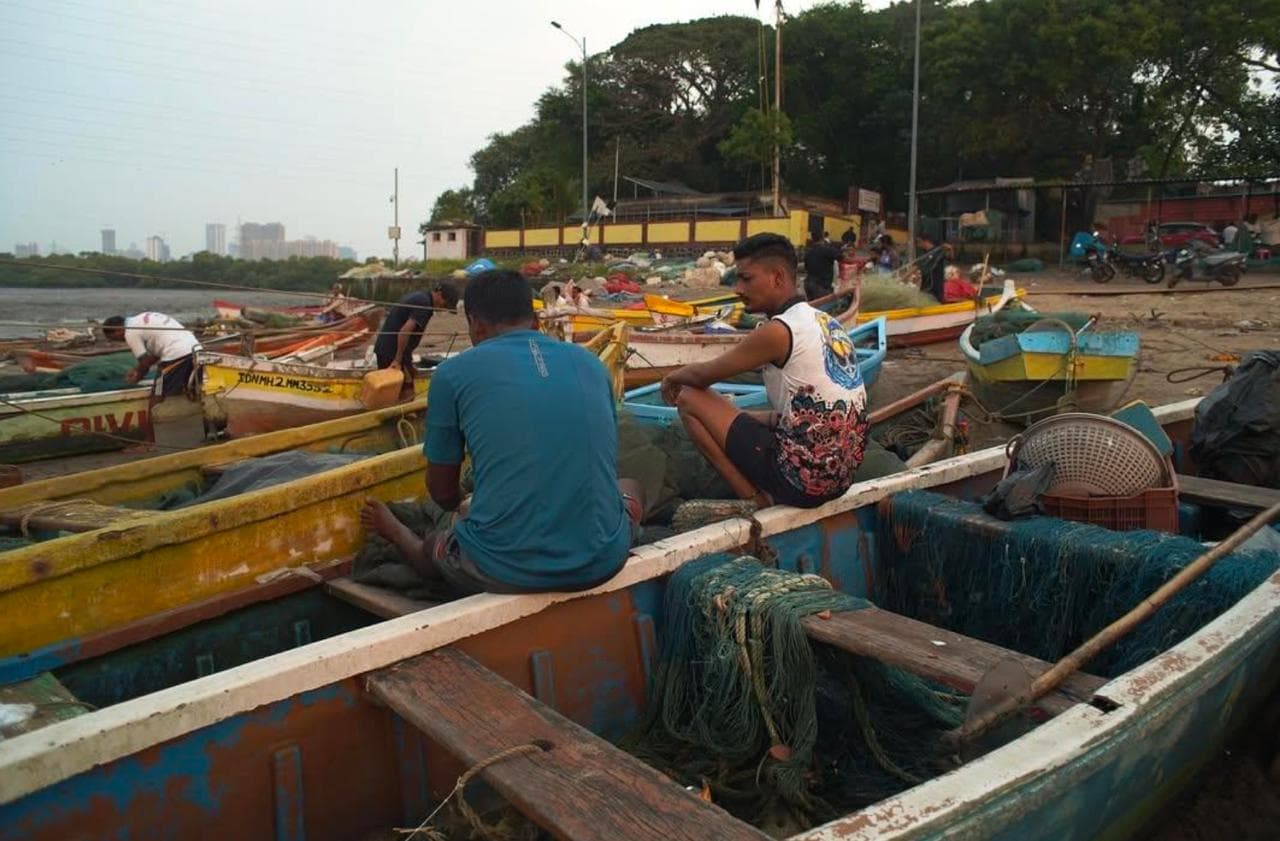
Image: Koli fishermen resting on their boats after a fishing session
According to Bhandari, "When Kolis first started living here, Mumbai wasn’t even called by that name. The Kolis have a long history with Mumbai, they have been a part of the culture of Mumbai for many centuries.”
While many Kolis, like Rajesh Bhandari, Adarsh’s father, still engage in fishing, it is a shrinking market due to the urban expansion. Nowadays, many younger Kolis, including Bhandari, have moved into non-fishing professions.
"My dad did fishing for years. He is now retired and works a different job. We’ve rented out our boats. Fishing is no longer a big thing for the younger generation. I am working in good company now,” Bhandari shared.
SOCIAL MEDIA AND CULTURAL REPRESENTATION
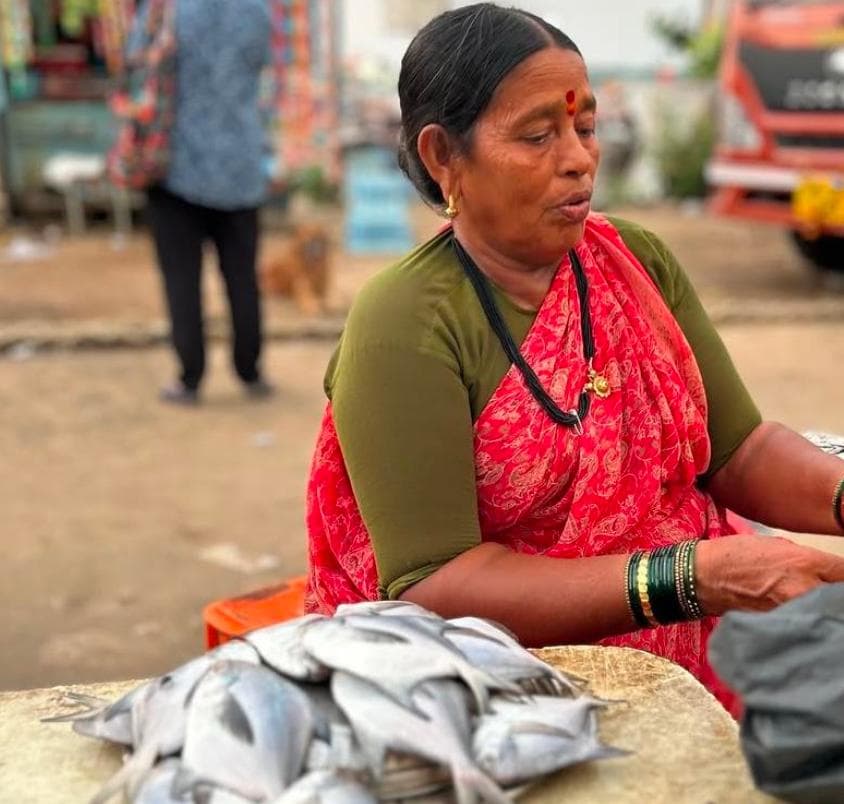
Image: Koli community woman preparing the fish for selling it in the market
Bhandari uses platforms like Instagram to show the culture, rituals and the daily life of Koli people, who otherwise do not get enough recognition for their culture and lifestyle.
“I show our rituals, our language, our attire, the food we eat, etc. on my page. I just want people to see it through pictures, it’s all so unique," he explains.
His attempt to make the community known, helps to bridge the gap between the Kolis and Mumbai’s modern urban lifestyle, creating a platform for their traditions to be recognised.
THE TRANSPORTATION CHALLENGE: THE FISH SUPPLY CHAIN AND LOCAL TRAINS
For many members of the Koli community, local train transport is an integral part of daily life. The Koli community also uses these trains to transport fish to wholesale and retail markets in a city where millions depend on trains to get to work.
Bhandari explained the process, "Most of the fishing takes place in coastal areas like Vasai and Virar. The fish is then shipped to different markets via local trains once it has arrived.”
The fish must be sold fresh, and the vendors suffer direct financial loss when there is any delay in there transportation. During a conversation with a local Train Station Master Prakash Mehta, it became apparent that train authorities do not have any specialised mechanisms for the fisherfolk.
Mehta shared, "We know that the fish trade is a time sensitive one. Unfortunately, because of overcrowding and our train system's inability to provide dedicated resources for specific groups, we cannot allow for flexibility outside of the existing routes and transport options in the current setup."
WHAT LOCAL TRAIN PASSENGERS THINK
The situation also affects the general passengers of the local train system. The transportation of fish causes overcrowding and delays, which leads to tension between the regular commuters. But some passengers are empathetic towards the issues of the community. One such passenger, Geeta Desai, a regular commuter from Andheri, shared, "I know how vital it is for the Koli community to bring their fresh catch. They’re a big part of our city’s economy, and it is a tough job. I do know that their work is essential, but overcrowding is always an issue. I think it would be better for the passengers and the fishermen if they had a more dedicated space or facility for their fish, so it would be a smoother experience for everyone."
VENDORS’ VIEW ON LOCAL TRAIN AND TRANSPORT ISSUES
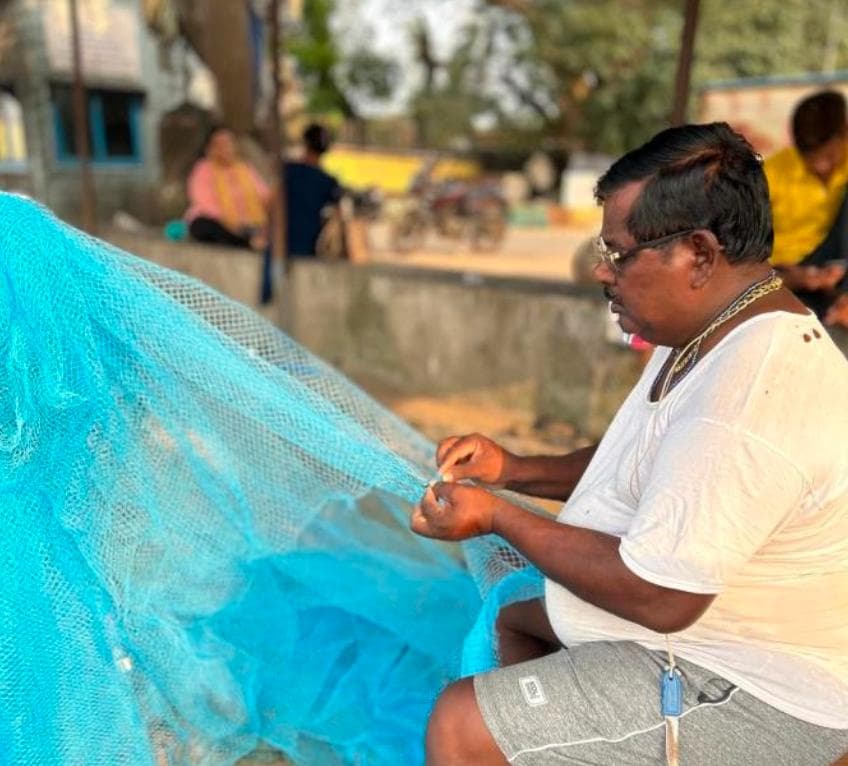
Image: Koli community man preparing a Dol net to be set in tidal streams
Vendors at the local fish markets have the same logistical challenges to highlight. Raghav Shah, a fish market vendor from Mahim, shared his viewpoint, “It is a race against time every day. But fish gets in by train, and it often doesn’t get in on time because trains are crowded. If the fish doesn’t get to the markets fast enough it spoils and the losses add up. Everything could change for us if we find a solution for quicker transportation.”
CONCLUSION
In conclusion, the Koli community faces substantial challenges regarding the use of local trains for fish transport. Despite the vital role local trains play in distributing fish across Mumbai, neither the Koli community’s cultural significance, nor the logistical needs of their profession are adequately addressed by railway authorities.
Some of these challenges could be mitigated by government interventions such as providing specific transport infrastructure for fish. The feedback from Koli community members, local train staff, passengers and market vendors demonstrate the urgent need for more efficient and culturally considerate transportation for Mumbai’s diverse population.