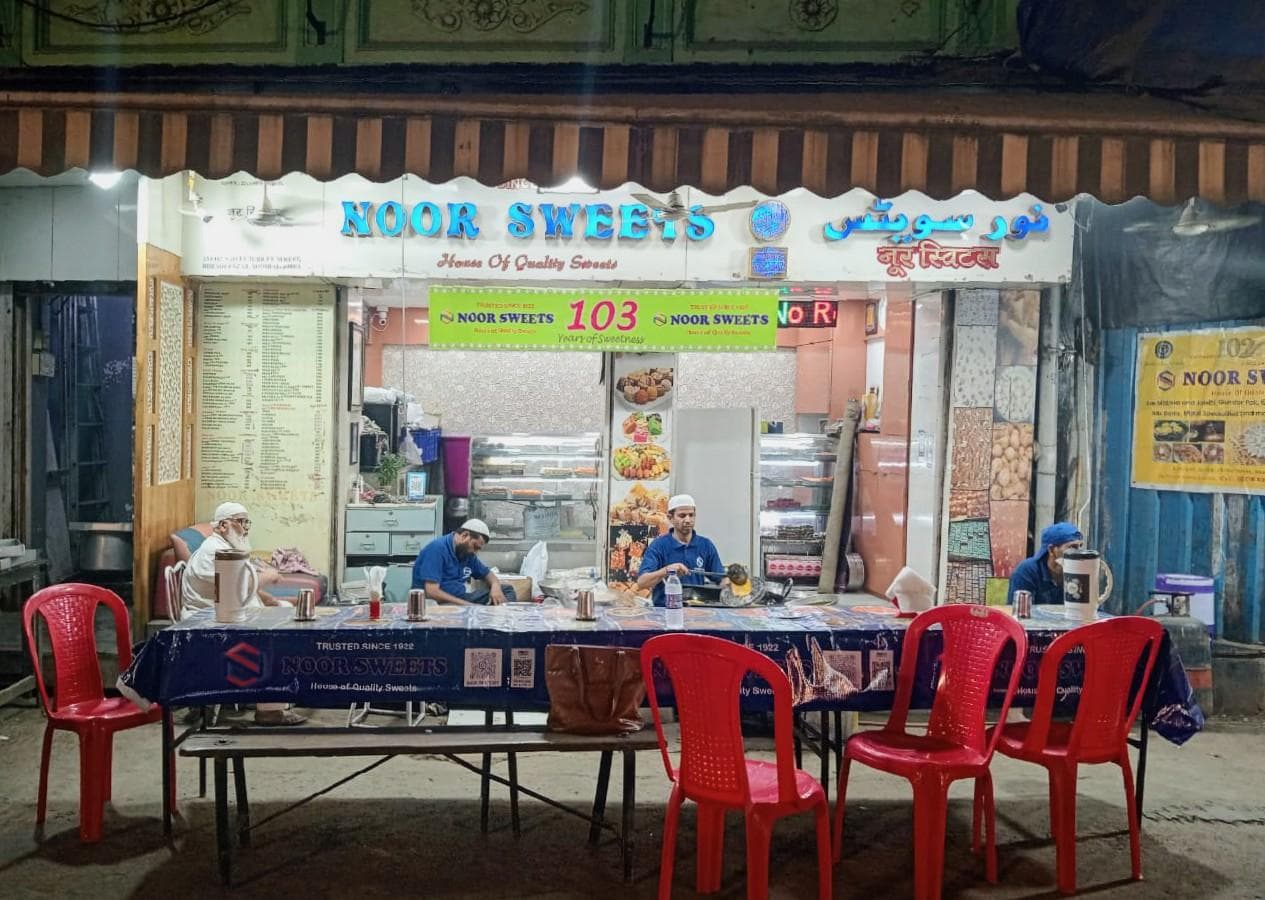
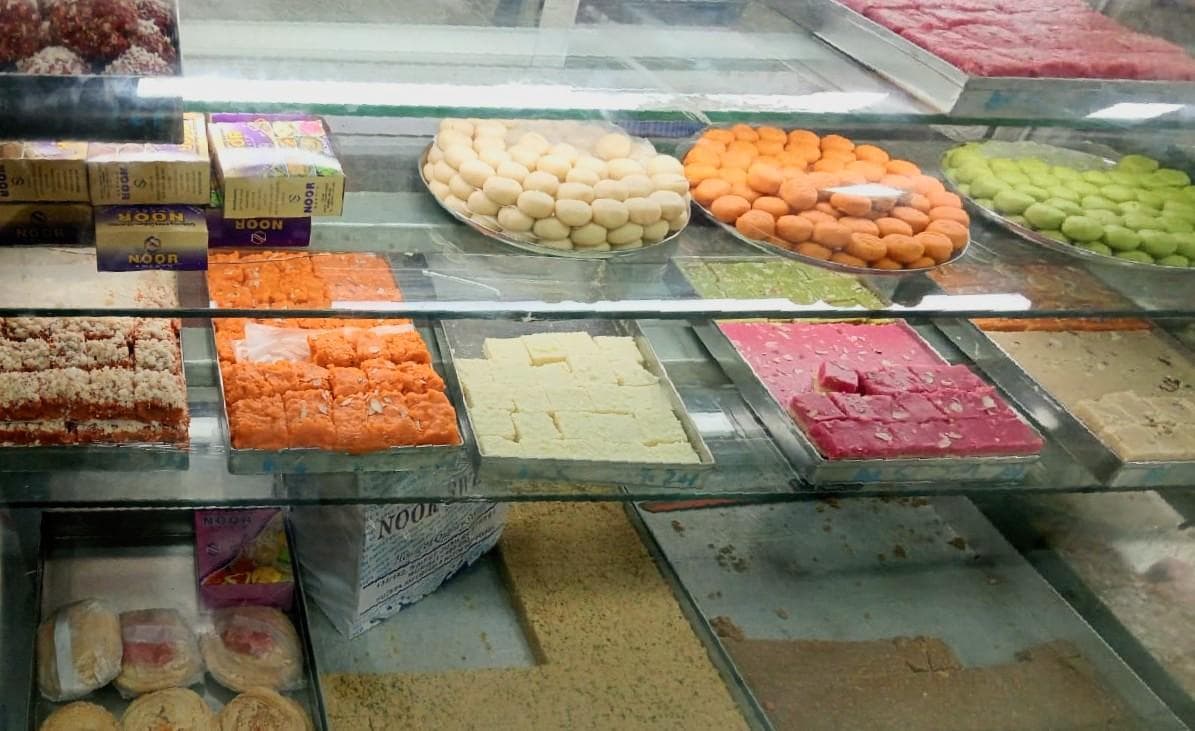
Noor Sweets’ Malai Khaja and Roasted Kaju Pak remain year-round favorites, but during Ramzaan, their Kesari Jalebis and Phirni steal the show.
“Instead of calling our shop 103 years old, I would rather call it a 103-year-young establishment,” says Husefa, who runs Noor Sweets with his brother Hatim in Bhendi Bazaar. Founded in 1922, this place has grown to become a Bombay landmark. The glass cases in the shop gleam with colorful mithais. The malpua they sell becomes one of the most popular dishes during Ramzaan. The malpua made by this shop stands out due to its uniqueness compared to the general understanding of it. “When I say malpua, for some, it’s just pancakes—a western version,” Husefa remarks. “But traditional malpua is of two types.” With celebrations come large-scale orders, sometimes reaching 100–150 kg during Ramzaan.
During iftar, jalebi is one of the most sold items. Noor Sweets takes pride in offering different varieties of jalebi. “Kesari, white, brown, yellow—we have more variants than other shops,” Husefa notes. A loyal customer, Imran Badami, expresses that Noor Sweets’ jalebis are an essential breakfast treat. “The best.” Customers praise not just the taste but also the service and reasonable prices.
Phirni is another highlight of Ramzaan. Noor Sweets features a wide variety of flavors that go beyond the traditional ones. “Lotus Biscoff, Pistachio, Blackcurrant, Kesar, Oreo, Cadbury,” Husefa lists. “People say, ‘So many flavors! We’ve only seen white and mango.’”
The newer introductions for Ramzaan include Chocolate Almond Fudge, made with freshly roasted almonds, chocolate, and cream.
Ramzaan brings Noor Sweets’ dishes into the spotlight; however, a couple of sweets compete for the bestseller spot throughout the year. One of those is Malai Khaja, a round, dome-shaped delicacy filled with fresh malai. Another customer favorite is Roasted Kaju Pak, known for its crunchy cashew texture.
The menu also includes unique premium offerings like Paan Shot Malai and Chocolate Almond Fudge. For making these, fresh ingredients—real paan, roasted almonds, and premium milk—are used.
There is a surge in the demand for sweets during the 27th night of Ramzaan, when bulk orders rise up to 100–150 kg. The tradition of large-scale iftar and community distribution continues through generations. Husefa says, “In order to cater to a wide variety of customers, we offer both affordable options, priced around ₹350–₹360 per kg, and premium selections reaching ₹1,300–₹1,400 per kg.”
While new technology and advancements have been adopted in the shop, many things remain unchanged about the 103-year-old shop. Some furniture, as well as the weighing scale used, hasn’t been changed since 1922.
After a Ramzaan food walk, customer Aditi Prabhu mentioned that the shop’s essence hasn’t changed. She calls the shop a definite must-visit.
Husefa reflects, “The legacy that I want to leave behind is that we remain the only establishment in Bombay that has called the same location home for 103 years.”
As the decades go by, the fourth-generation owners uphold the family legacy. During Ramzaan, the special delights offered continue to create fascination and attract customers to this shop for its unique approach.