
The five-day Diwali festival for the Kannada community in Nagpur unravels with Dhantrayodashi, dedicated to Lord Dhanvantari, the divine embodiment of Ayurveda. Families present medicinal herbs and roots, while gold is customarily procured as a harbinger of prosperity. Courtyards are adorned with rangolis in shades of crimson, saffron, and ivory, encircled by diyas.
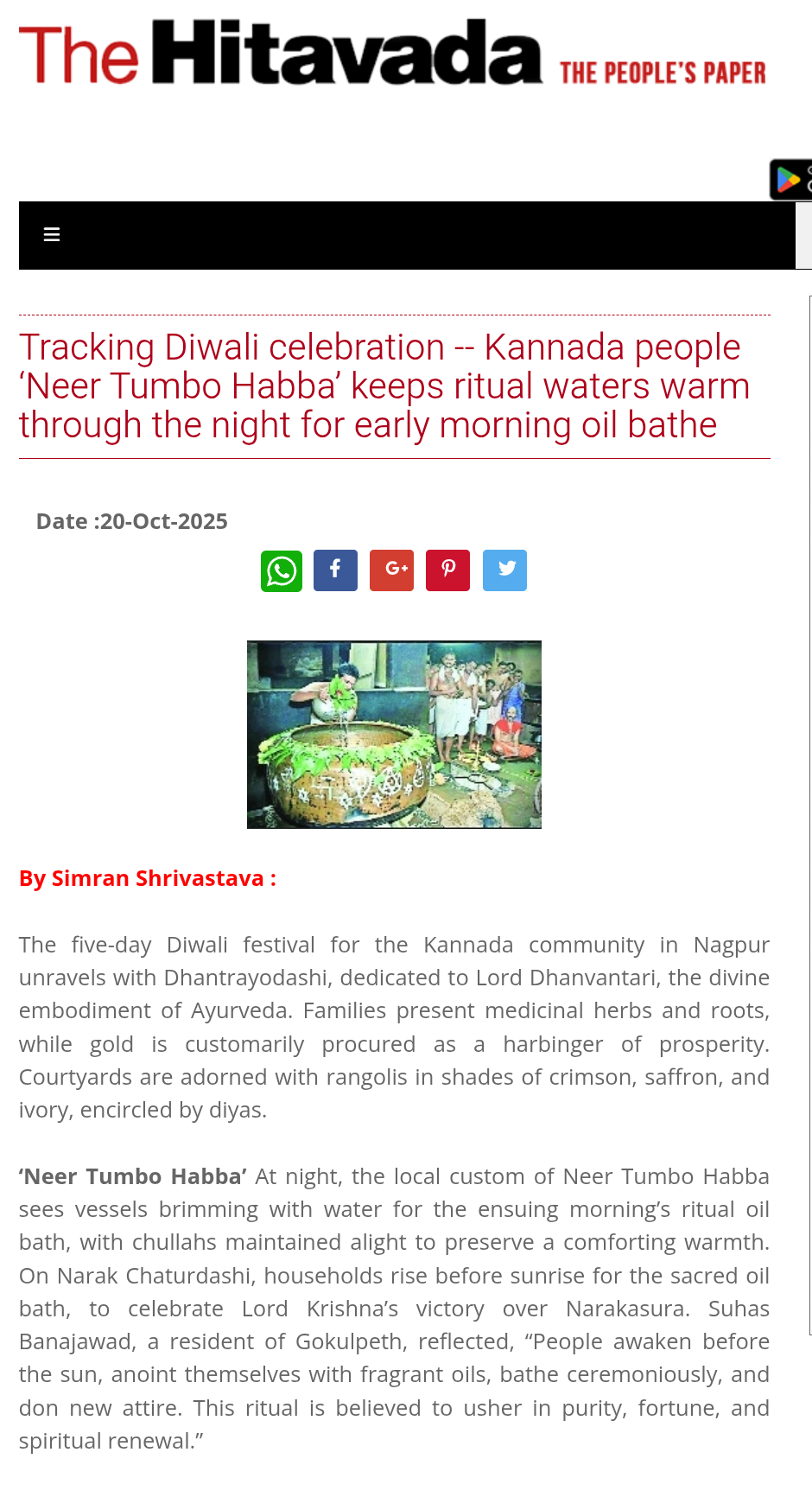
‘Neer Tumbo Habba’ At night, the local custom of Neer Tumbo Habba sees vessels brimming with water for the ensuing morning’s ritual oil bath, with chullahs maintained alight to preserve a comforting warmth. On Narak Chaturdashi, households rise before sunrise for the sacred oil bath, to celebrate Lord Krishna’s victory over Narakasura. Suhas Banajawad, a resident of Gokulpeth, reflected, “People awaken before the sun, anoint themselves with fragrant oils, bathe ceremoniously, and don new attire. This ritual is believed to usher in purity, fortune, and spiritual renewal.”
The inaugural Diwali after a daughter's marriage is celebrated at her parental home. Govindaraja Bhatta, a resident of Surve Nagar elaborated, “The newly-wed couple is honoured with silk gifts, and traditional delicacies are lavishly prepared.” The subsequent day, idols of Goddess Lakshmi, Lord Ganesha, Lord Kuber, and Goddess Saraswati are resplendently adorned with diyas. Newly-acquired utensils and household items are ceremonially offered to the deities. Spouses partake in the haldi-kumkum ritual and exchange customary. They are believed to embody Lakshmi and Narayana. Firecrackers decorate the night sky while neighbours exchange sweets.
On Balipadyami, miniature cow-dung forts are carefully fashioned for Govardhan Puja. “We honour Vishnu’s Vamana avatar, which sent King Bali to rule the netherworld and grants him an annual return to earth. We commemorate the visit of King Bali on this day. Kuldevtas of the homes are also venerated, daughters and daughters-in-law receive gilded ornaments, and food and garments are generously donated to the needy,” Bhatta explained. “The festival culminates with Yama Dvitiya, which celebrates the brothers and sisters through aarti and gifts. Relatives visit one another and partake in celebratory feasts,” Banajawad remarked. Temples such as Hanuman and Venkateshwara gleam as Kannada people dot them in freshly-worn clothes. Throughout the festival, lamps cast swaying shadows across walls, and bathe homes in a festive glow.
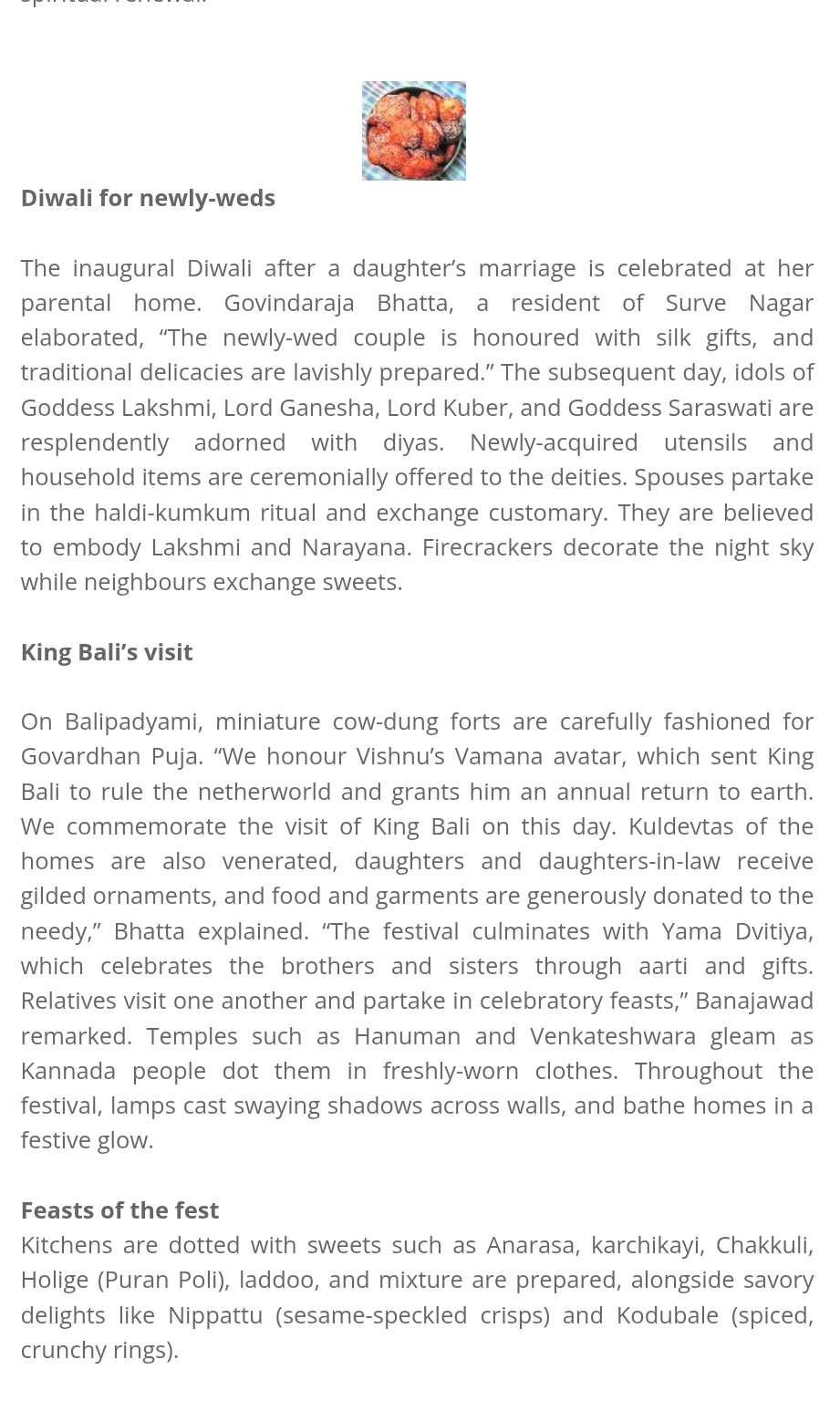
Kitchens are dotted with sweets such as Anarasa, karchikayi, Chakkuli, Holige (Puran Poli), laddoo, and mixture are prepared, alongside savory delights like Nippattu (sesame-speckled crisps) and Kodubale (spiced, crunchy rings).