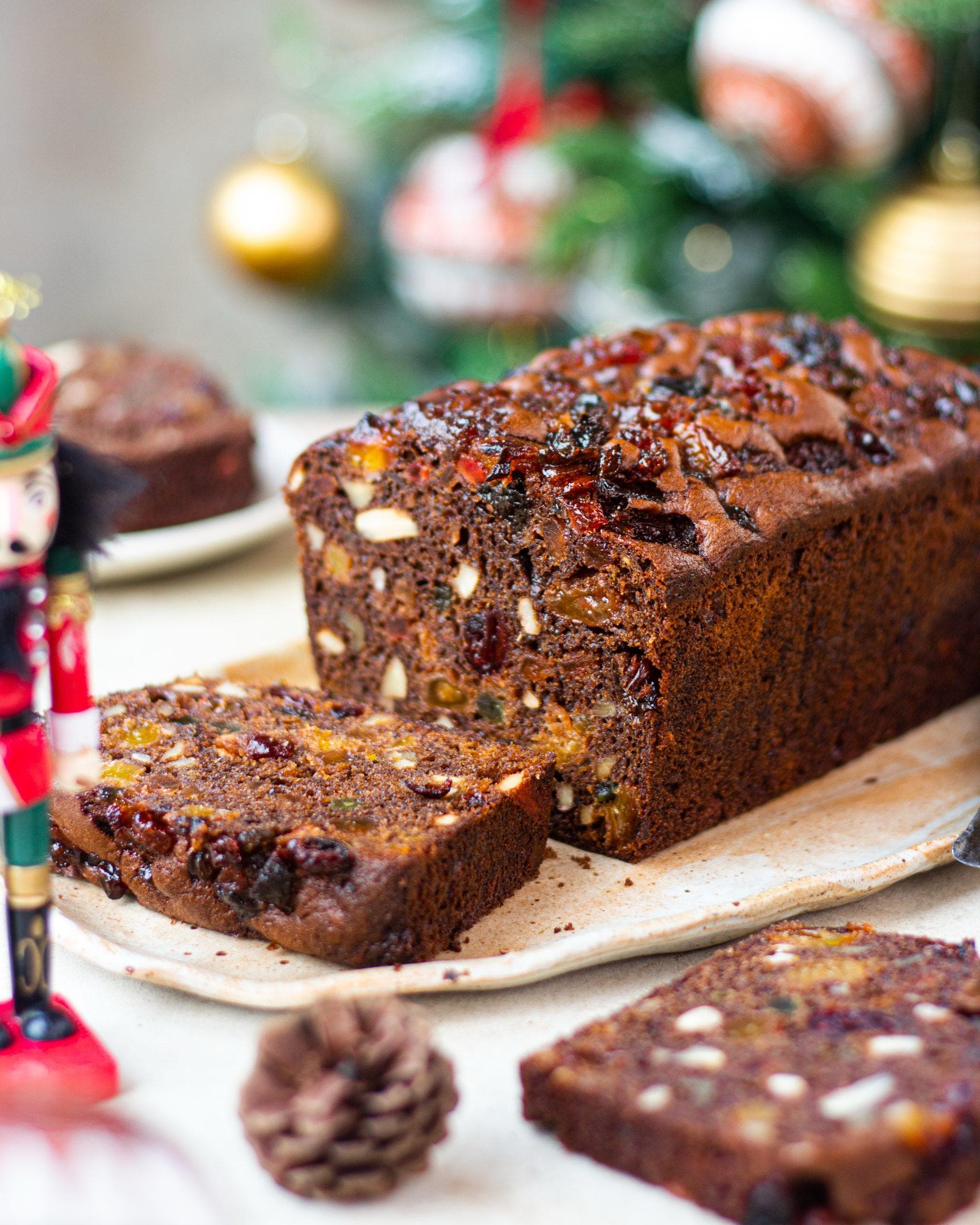
In Nagpur, Christmas is not experienced as a single day but as a gradual unfolding. The season announces itself quietly, through weeks of preparation in bakeries and homes where patience is ritualised and flavour is allowed to mature. Dry fruits steep in alcohol, spices rest, and calendars are measured backward. The Christmas cake, dense and enduring, becomes a material record of waiting, memory, and shared belief.
At Jubilee Bakery, this rhythm translates into a distinct seasonal grammar. Ambrose Dalgado, proprietor of the Mohan Nagar outlet, observes that Christmas preferences are anchored firmly in tradition rather than novelty. “The trend is of rum or extra rum cakes made in butter,” he says, noting that customers increasingly privilege depth of flavour over visual flourish. Icing-heavy cakes, he adds, are not very common during Christmas, with demand leaning decisively towards dry cakes that improve with time rather than decoration.
This preference extends to the wider festive assortment. Karanji, rose cookies, and similar Christmas preparations continue to circulate alongside cakes, unchanged by passing trends. As the festival draws near, the pace intensifies sharply. “Demand for Christmas cake is very high during Christmas,” Dalgado says, describing a brief but concentrated surge that shapes the bakery’s annual cycle and requires careful advance planning.
That sense of advance preparation is mirrored within domestic kitchens. Daisy Jose, an Income Tax Officer who nurtures a personal passion for baking, speaks of Christmas preparation as an act rooted in joy and offering. Baking, for her, is directed toward people rather than occasion. “Mostly rum cake is made by us,” she says. “One month before, we put dry fruits soaked in rum. Christmas prep starts one month before.”
Jose situates this practice within a longer cultural history. Christmas cakes, she explains, are closely tied to festive tradition, particularly in societies where December historically marked the end of the harvest season. It was a period associated with feasting and merriment, when preserved ingredients such as dried fruits, spices, and nuts were transformed into cakes reserved for celebration rather than everyday use.
Layered onto this practice are symbolic interpretations within Christian belief. Many Christians understand the cake as representing Jesus Christ, the “bread of life.” Some read the round shape of the cake as symbolising the crown of thorns, while icing is associated with the glory of heaven. These meanings, Jose notes, are not prescriptive but reflective, allowing faith to be expressed through familiar forms.
Wine, she adds, carries a similarly layered significance. In Christian tradition, wine symbolises the blood of Christ, referencing the Last Supper as recorded in Luke 22:20, and remains a sacred element of Communion. At the same time, wine has long featured in festive toasts and gatherings across cultures, contributing warmth and conviviality to celebration. Over time, these symbolic and social meanings have blended with local practices, resulting in a wide range of Christmas cakes — fruit cakes, plum cakes, rum cakes, chocolate cakes, ribbon cakes, and walnut cakes.
Jose notes that the tradition of Christmas cake likely arrived in India with British colonists and gradually took on local form. Over generations, it became a festive staple, exchanged with friends, family, and neighbours as a gesture of goodwill.
This emphasis on sharing finds broader articulation in the reflections of Joseph Dsouza, a teacher at St Anthony's High School Ajni and a member of the Mary Queen of Apostles Parish at Pallotti Nagar. He stresses that the Christmas cake belongs to culture rather than commandment. “The tradition of cake at Christmas among Christians is cultural rather than strictly biblical,” he says, explaining that it evolved over centuries as part of celebrating the Nativity of Jesus Christ through joy, hospitality, and shared food.
Early Christian communities, Dsouza explains, marked major feasts with communal meals that translated belief into lived practice. Over time, sweet breads and cakes became embedded in these gatherings as expressions of thanksgiving. European traditions shaped the forms these foods assumed. England contributed Christmas pudding and later rich fruit cakes prepared weeks in advance as symbols of abundance. Germany offered stollen, its form associated with the Christ Child wrapped in swaddling clothes. Italy added panettone and pandoro, festive breads designed for sharing within families. Through missionary movement and colonial influence, these practices travelled and became part of Indian Christian life.
While not a religious requirement, Dsouza says Christmas cake accrued symbolic resonance. Sweetness came to signify the joy associated with Christ’s birth. Sharing cake reflected Christian values of fellowship, charity, and community. Fruits, nuts, and spices symbolised abundance and blessing, with spices often linked symbolically to the gifts of the Magi.
Hospitality, he adds, lies at the heart of the practice. Christmas foregrounds themes of welcome — the belief that God welcomed humanity through Christ — and extends this idea to caring for neighbours, guests, and the poor. Offering cake thus becomes a social expression of faith through generosity.
In Nagpur, this tradition extends beyond Christian households. “Most famous bakery where not only Christians go but others too is Jubilee Bakery, which has many branches in Nagpur,” Dsouza says. According to him, plum cake, fruit cake, rum cake, and veg cakes are especially popular, while demand for eggless cakes has also grown, reflecting changing preferences without altering the ritual itself.
Cake, he notes, also carries meaning beyond Christmas. In Christian weddings, cake symbolises joy, unity, and shared celebration, much like birthdays. Christmas draws on the same symbolic language. “Like birthdays we cut cake, so we say Happy Birthday Jesus and cut cake and share,” he says, drawing a parallel with other cultural practices. “Like shirkorma during Eid, same way Christmas time cake is a must in families.”
He underscores a necessary distinction. The Bible does not instruct Christians to have cake at Christmas. The theological centre of the festival remains the proclamation from Isaiah 9:6, “For unto us a child is born.” Cake, he emphasises, is a cultural articulation of celebration, not a religious obligation.
Taken together, these voices reveal the Christmas cake in Nagpur as more than a festive dessert. It is the outcome of time, preparation, and belief — a tradition sustained by labour and memory, shaped by faith and adaptation, and carried forward through the enduring practice of sharing across homes, bakeries, and communities.